Fete, Fair or Show: What Makes Each Gathering Distinct?
Learn the difference between a fete, fair and show by spotting each gathering’s purpose, activities and atmosphere before you arrive.
A fete, fair or show can put stalls, food and a crowd in the same field, yet each gathering has a different center of gravity. To tell a fete from a fair or show, look at what the day is organized to do: bring people together for a local cause, offer a lively mix of attractions, or present something for people to see and judge. The distinctions are useful, but they are not rigid rules. A village can combine all three traditions without choosing a winner.
What is the gathering trying to do?
Start with the event’s stated purpose, not its name. A fete is commonly organized around a community, school, church, or charitable cause. Its character comes from local participation: people donate goods, run a cake stall, sell plants, arrange a raffle, or volunteer at a game. The activities may be modest, but the event’s social purpose is easy to recognize.
A fair tends to promise variety and movement. Visitors might find rides, food sellers, games, crafts, music, or market stalls in one place. Some fairs have a seasonal or commercial character; others are firmly local. What ties the attractions together is the invitation to browse, wander and choose what catches the eye.
A show puts a display, demonstration or competition at its heart. An agricultural show might feature livestock, produce, machinery or skills. A flower show could center on arranged blooms and judged entries. The exhibits give visitors something specific to inspect, while classes, prizes or demonstrations may provide a schedule and a focus.
These descriptions overlap in practice. A fete may have a craft competition; a fair may include livestock displays; a show may also raise funds for a local cause. The clearest description names the main purpose, then mentions the other features. “A village fete with a produce show” tells a reader more than a label alone.
What does each event feel like on arrival?
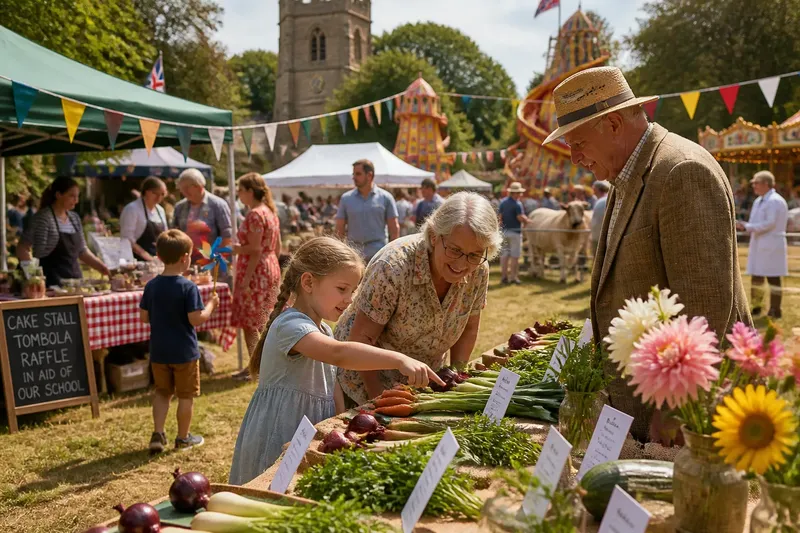
At a fete, the first impression is often of familiar people doing useful, visible jobs. One person serves tea, another explains the tombola, and a child tries to keep a paper windmill upright in the breeze. The stalls may be arranged around a lawn, school field or churchyard. You can often understand the event by watching how neighbors greet one another and what the proceeds support.
A fair can feel more like a route through attractions. Sound and movement may lead the way: a caller at a game, music from a platform, the clatter of a ride, or the smell of warm food. A visitor may arrive with no particular purchase in mind and spend time following the liveliest corner. The fair’s identity is in that mix of things to do.
A show invites a more attentive kind of looking. A row of vegetables may have labels; animals may be presented in a ring; handmade work may sit behind a display card. Visitors pause to compare, ask how something was made, or watch a demonstration. Even when there are refreshments and side stalls, the exhibits tell you what the event most wants people to notice.
Atmosphere is a clue, not a test. A quiet produce show can be full of neighbors catching up, while a fete can draw a large, noisy crowd. Names and customs vary between places, so it is better to describe what is actually there than to insist that an event must fit a textbook definition.
How can you describe a gathering accurately?
Use a simple sequence when telling someone what to expect: identify its central purpose, name the activities that support it, then add a detail about the setting or rhythm. This avoids turning a local event into a generic “summer day out.” It also helps a newcomer decide whether to expect stalls, displays, performances or a mixture.
- Fete: Mention the community or fundraising purpose, then the stalls and small activities that make it welcoming.
- Fair: Describe the attractions and the freedom to wander, browse, play or eat.
- Show: Name what is displayed, demonstrated or judged, such as flowers, livestock, produce, crafts or local skills.
- Mixed event: Lead with the main draw and add the other strand, as in “a village fair with a flower show.”
- Unclear label: Describe the visible program rather than guessing at the organizers’ intention.
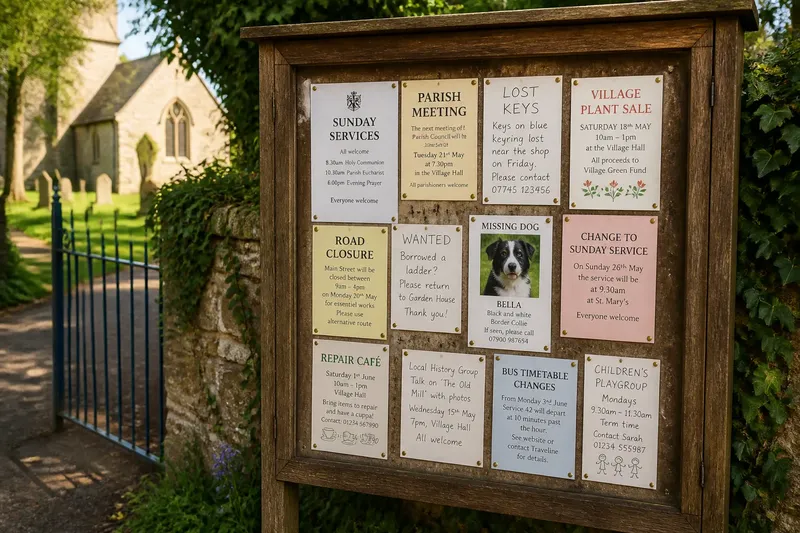
Say you see a poster for a gathering at a village green. It advertises homemade cakes and a raffle for the school, a few children’s games, and a table of prize-winning vegetables. Calling it a fete with a small produce show explains both its community purpose and its display element. If the poster instead centers on rides, food stands and a craft market, “village fair” may set expectations more accurately.
What should you check before you go?
A name rarely answers every practical question. Look for the program, venue details and any note about entry or facilities. An event called a show may be a compact indoor display, while a fair may occupy several fields. The words on the poster offer a clue; the schedule tells you how the day will unfold.
For a fete, check whether the advertised stalls or games are tied to a particular cause, and whether there is a set time for a raffle or performance. That can help you arrive when the event is lively without assuming every activity runs all day. If you are going with children, a short glance at the program can reveal whether there are games or space to roam.
For a fair, check which attractions are actually listed. The word does not promise rides, a market, or any particular kind of entertainment. A small village fair may be mostly craft stalls and music; another may have a busy midway. Let the organizer’s description, rather than the broad label, guide your expectations.
For a show, look for the subject and any published timetable. Exhibits may be available throughout the day, while judging, demonstrations or a parade happen at particular times. If you want to see a particular class or activity, the program matters more than arriving simply because the gates are open.
What is not worth the effort? Trying to police the title as though “fete,” “fair” and “show” were official grades. Local usage is flexible, and an event’s character can shift from year to year as organizers change the program. A useful description should help people picture the day, not correct the person who printed the poster.
How do the names overlap in real life?
A familiar name can carry local meaning that a visitor will not know. In one place, “the show” may refer to an agricultural gathering with competitions and trade stands. In another, “the fair” might be a long-running annual occasion whose program includes a judging tent. The community’s own usage is part of the event’s character.
Organizers also combine purposes for practical reasons. A village fete can add a display of baking to give local makers a reason to enter. A fair can host a produce competition that draws growers who would not otherwise come. A show can include food and craft stalls so visitors have more to do between scheduled events. These additions do not erase the central purpose; they give it company.
When writing an invitation or giving directions, choose words that orient people rather than overpromise. “A family fete with homemade cakes, a plant stall and games on the school field” makes the day legible. “A local show featuring flower arrangements and a produce table” tells visitors where to look. Specifics are friendlier than a grand label unsupported by the program.
Which questions help you tell them apart?
Does a fete always raise money for charity?
Not necessarily, though fundraising for a school, church, club or local cause is a familiar feature. The broader clue is its community-led character, with stalls and activities organized around bringing people together.
Does a fair need rides?
No. Rides may be part of a fair, but so can market stalls, games, food, crafts and performances. Check the advertised program rather than treating “fair” as a promise of a midway.
What makes an event a show?
A show generally has a subject on display or a skill being demonstrated, often with entries, classes or judging. The subject might be agriculture, flowers, baking, crafts or another local interest.
Can one event be a fete, fair and show?
Yes. A gathering can raise funds, offer a varied program and include judged exhibits at once. Describe the part that leads the day, then add the other features so readers know what to expect.
What does the distinction tell you about local life?
Each kind of gathering makes a different form of participation visible. At a fete, local effort may be easiest to see in donated goods, staffed stalls and money raised for a shared purpose. At a fair, the emphasis can be on making a place lively and giving visitors choices. At a show, people bring knowledge and care to something they want others to see, compare or learn about.
Those roles can overlap, and that is often the point. The same person might bake for a fete, enter flowers in a show and buy lunch at a fair. The event’s name gives you a first hint, but the details reveal how a community is spending its time together.
So when someone asks what is happening on the green, answer with the central purpose and one concrete detail. That is the most useful way to tell a fete, fair or show apart—and the easiest way to help a neighbor decide whether to come for the cake stall, the displays, the rides, or simply the company.